Code Hack:
Everyone Is an Innovator
Program Design
Digital Transformation
Brand & Campaign
Annual health hackathon innovation series that brought frontline and patient voices into system-level problem solving.
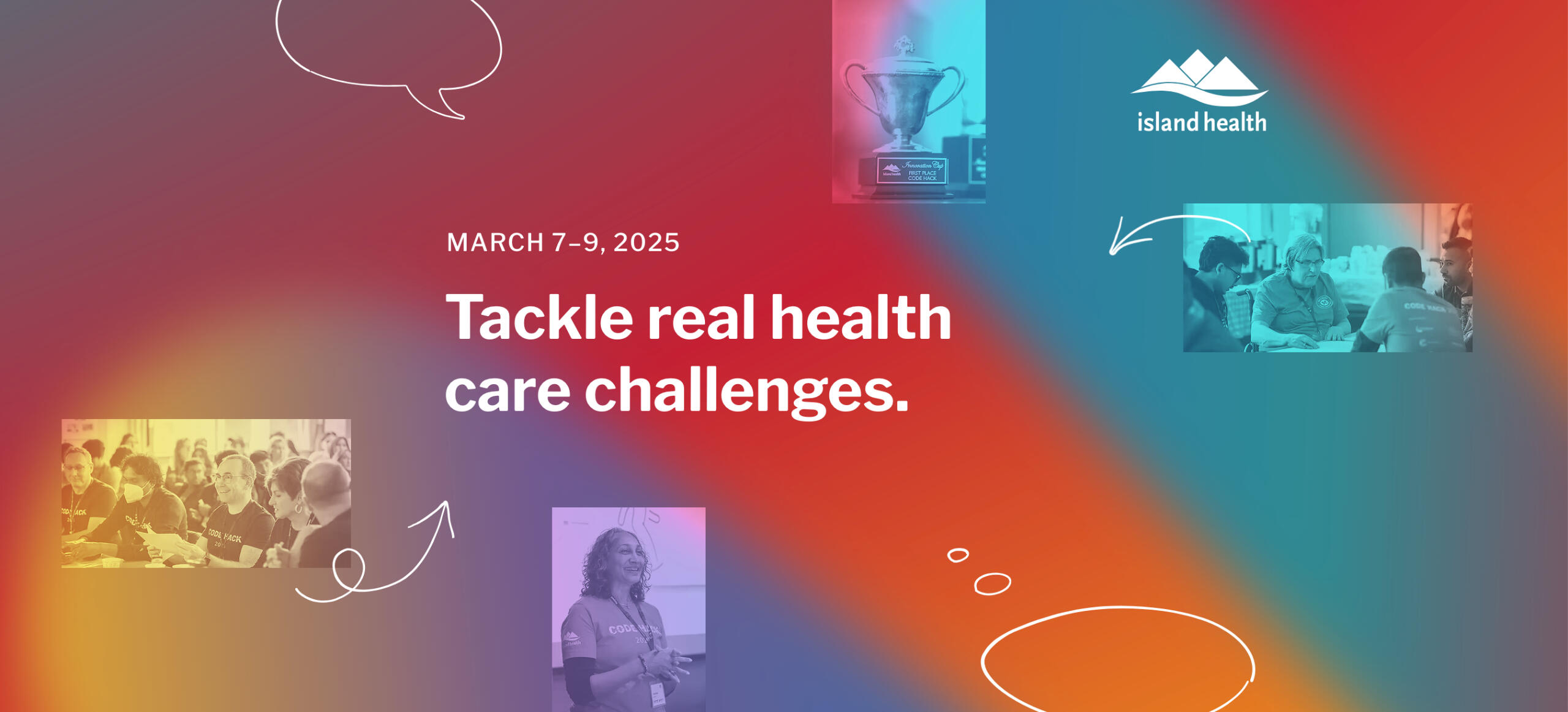
Who gets to innovate in healthcare and how do they do it?
The people closest to healthcare see problems and possibilities every day. The question was how their ideas could matter and how a regulated health system could be transformed from within.
Island Health is a regional public health authority serving 850,000 residents and employing more than 30,000 people across Vancouver Island and the surrounding coastal communities. That scale and complexity means there is structural distance between the people who make decisions, the people who deliver care, and patients.
Before the pandemic, innovation was a word I would see written in organizational strategies and repeated in emails. Executive clearly signalled that innovation was needed to improve patient outcomes.
What was not clear was how you actually innovate and who got to do it. There was no dedicated innovation department. No platform, no process, no clear pathway, and no dedicated budget. It was greenfield territory, ripe for its own innovation.
In my role as the Director of Brand, Digital Engagement and Innovation, I had a vision to bring a cost-neutral, health-focused hackathon into the organization as a structured platform for collaboration, one that placed frontline voices and patients at the centre of system-level problem solving. Together with a talented crew of nurses, designers, clinicians, and organizers, we conceived the model of turning problems into possibilities, pitched it to executive, and built Code Hack from the ground up.
A healthcare hackathon for all
Code Hack ran annually at the Royal Jubilee Hospital, drawing up to 100 participants and dozens of volunteers, alongside sponsors, academic partners, and community organizations.
The hackathon was a fun, intense 24-hour event where qualified teams of staff, patients, physicians, industry experts, designers, and students competed against the clock and each other to solve the most challenging health problems.
Code Hack was designed around four principles: courageous innovation, strong partnerships, excellence, and the belief that we are better together. Those principles shaped every decision, from how teams were built to how problems were selected. The event gave teams the conditions to pitch real health challenges and prototype solutions. Winning teams received cash prizes and six months of Innovation Lab support to continue refining their prototypes with mentors and community partners.
Teams were built using a colour-coded role system: Patient, Builder, Ally, Frontline, and Designer. Every team was required to include one of each. No team could form without lived experience alongside technical and clinical expertise.
Success wasn't measured by implementation. It was measured by whether the right people had been given the conditions to surface an idea worth pursuing. Across five years, the range of problems participants chose to tackle reflected the breadth of the program's clinical, social, and systemic reach. Selected prototypes include:
- First Nations medication access: An AI mobile app helping First Nations patients and pharmacists navigate medication coverage through BC's Plan W. Team FNRx.
- Hospital food waste: A system redirecting excess food from hospital kitchens to discharged patients at risk of malnutrition. Team Surplus for Purpose.
- Fentanyl detection: A discreet rapid-detection device built on existing strip technology. Team Fenta-Nil.
- Remote eye care and early diabetes detection: Bluetooth-connected kits enabling eye scans in vulnerable communities with data routed to specialists. Team Zero Blindness.
- Patient dignity: A bedside hygiene solution centred on dignity as the design principle. Team Ergo.
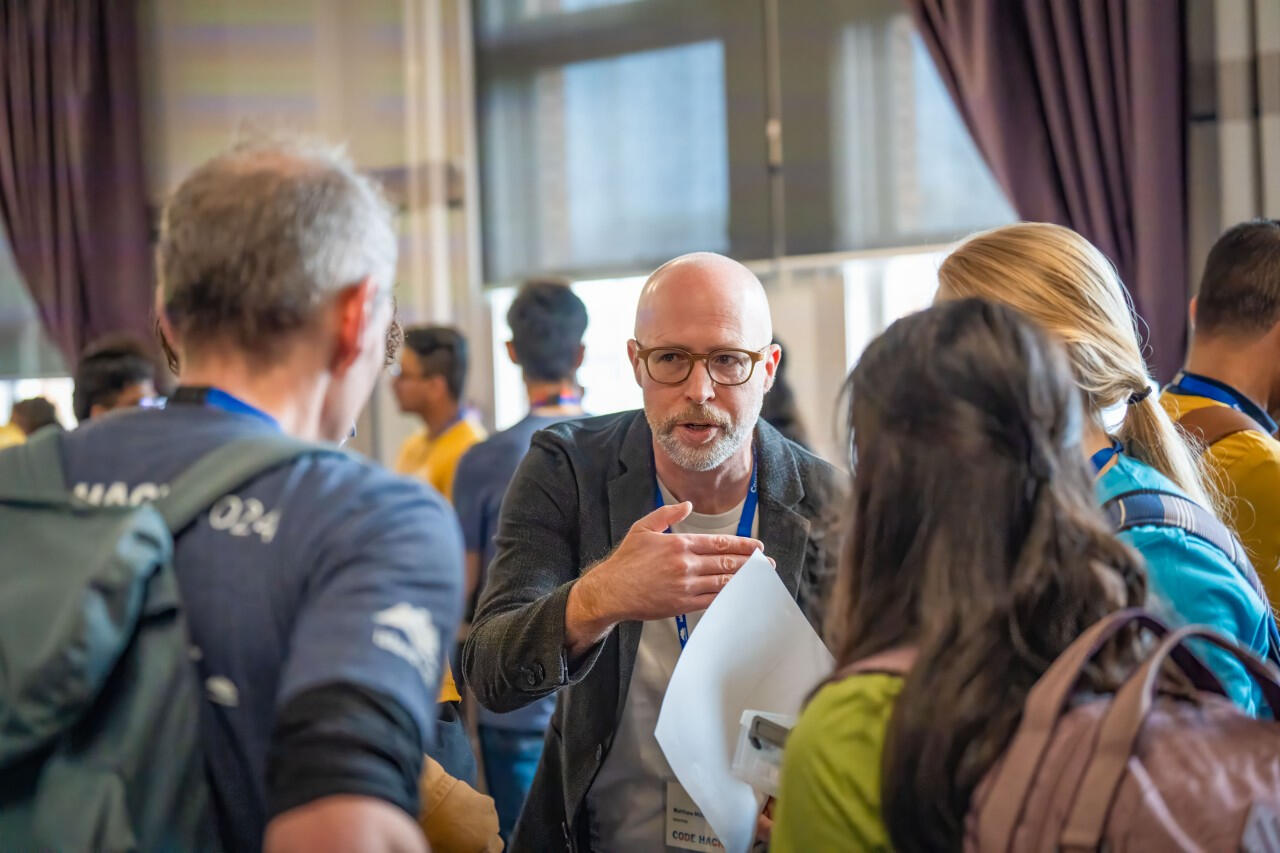
Matthew mentoring a team at Code Hack 2024.
Prototype. Build. Ship.
The security and privacy conditions inside a health authority, like most regulated environments, prevents staff, other organizations, and the public from collaborating in a shared digital space. Code Hack had to solve that fundametal, system-wide problem before the event could get off the ground.
Building a digital platform that could connect staff inside the health authority with participants outside it, in a secure environment that managed innovation intake, protected intellectual property, included pre-event voting, and included a live event display, required the same iterative thinking the hackathon itself was built on.
Three iterations, starting from a minimal viable product, produced a cost-effective collaboration tool built for regulated environments and transferable to any private-sector organization running the same kind of event.
| Code Hack Platform Capabilities | 2019 & 2020 Prototype Event Portal | 2023 & 2024 Custom Build Community Forum + Jira Service Manager | 2025+ Production Platform Cloud Platform + Jira Service Manager |
|---|---|---|---|
| Participant registration | |||
| Automated communications | |||
| Challenge participant portal | |||
| Community voting | |||
| Live event display | |||
| Admin & data tracking | |||
| Dedicated event website |
An Open Invitation to Improve Health Care
I've described Code Hack as what happens when you take Dragon's Den and a 24-hour science camp for adults and host it in a hospital. The challenge was extending that invitation to people who had never been included in an innovation process before. These two event promos show how that call evolved from 2019 to 2025.
Fun. Collaborative. Inclusive.
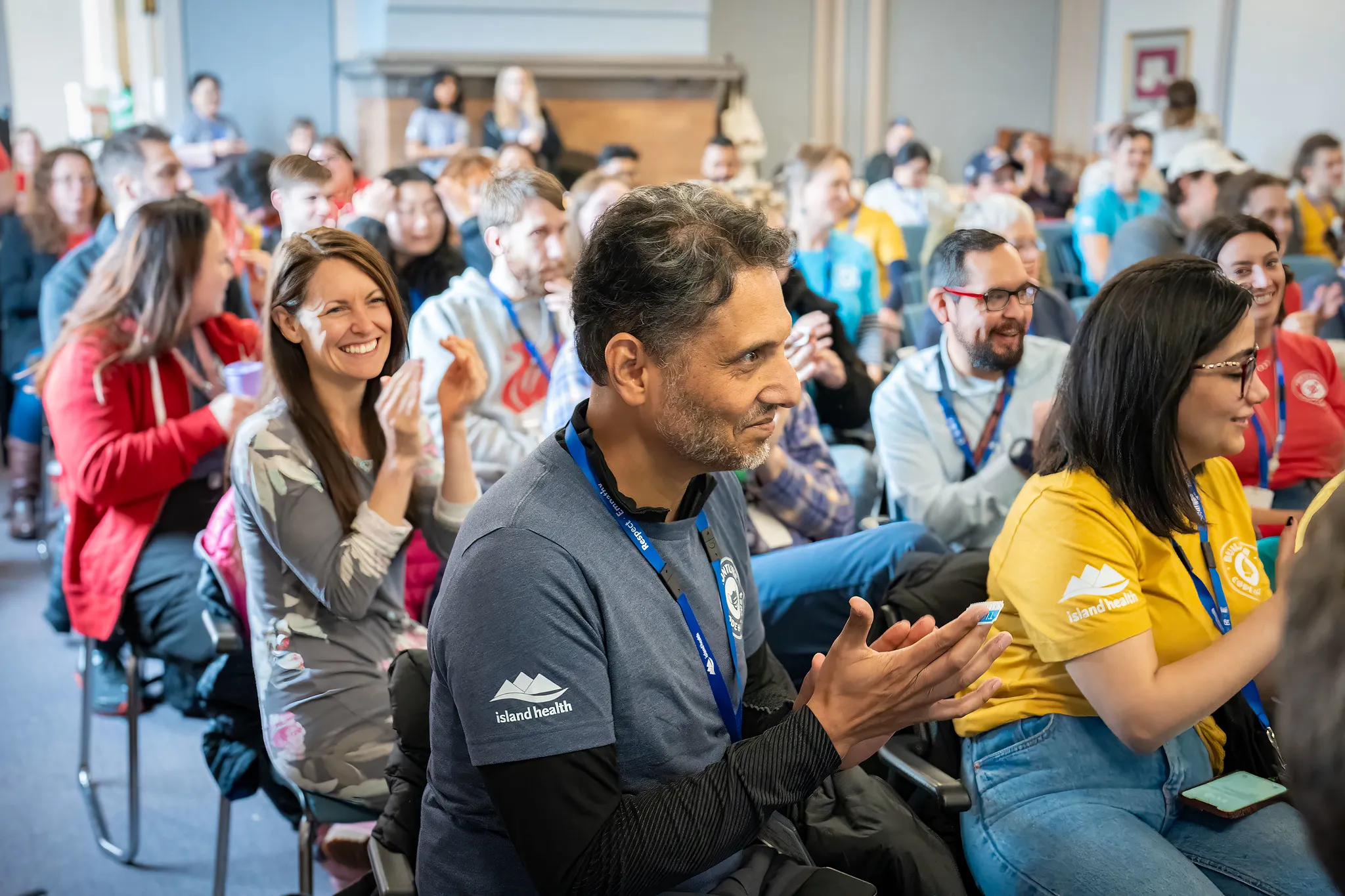
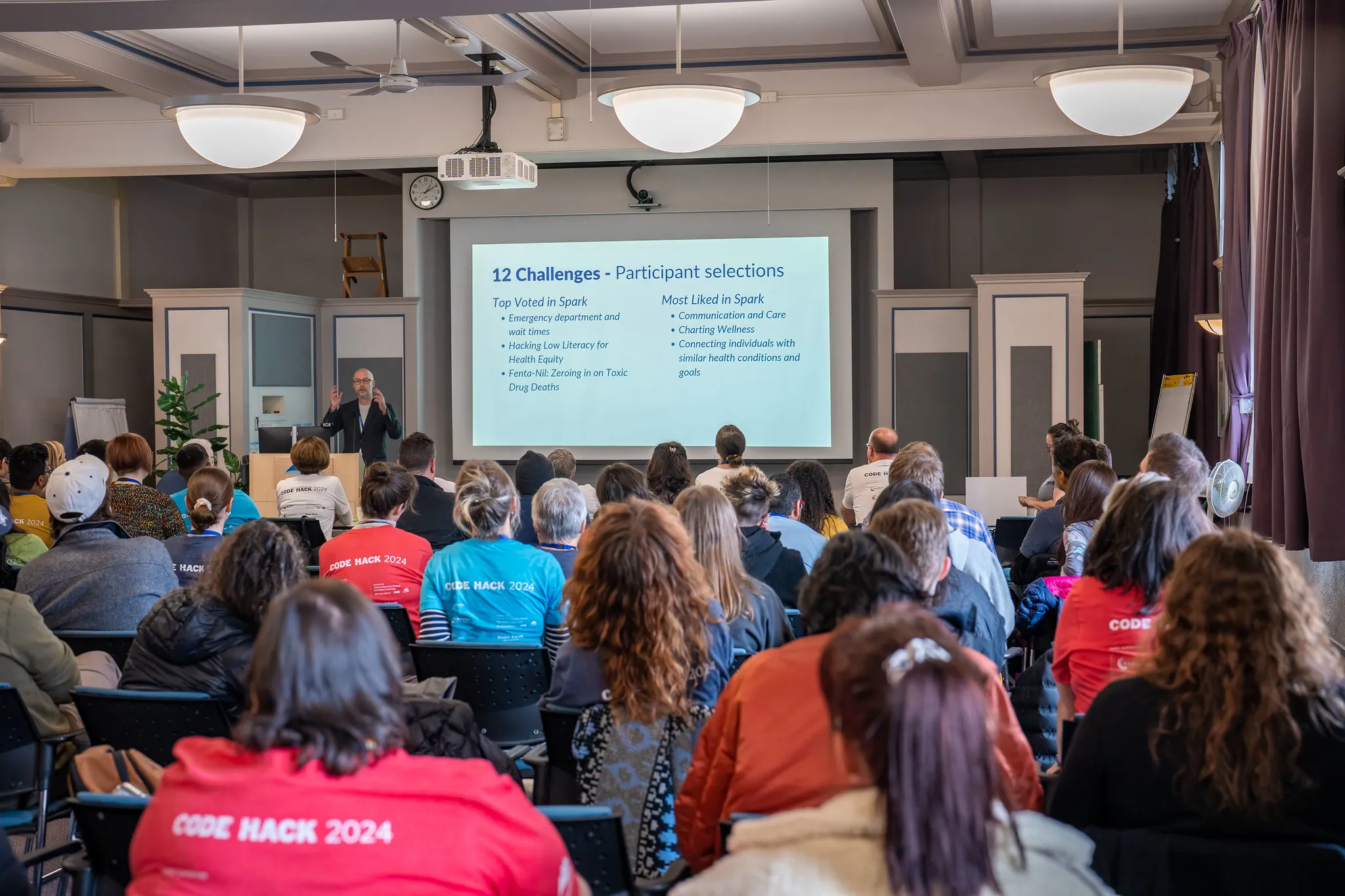
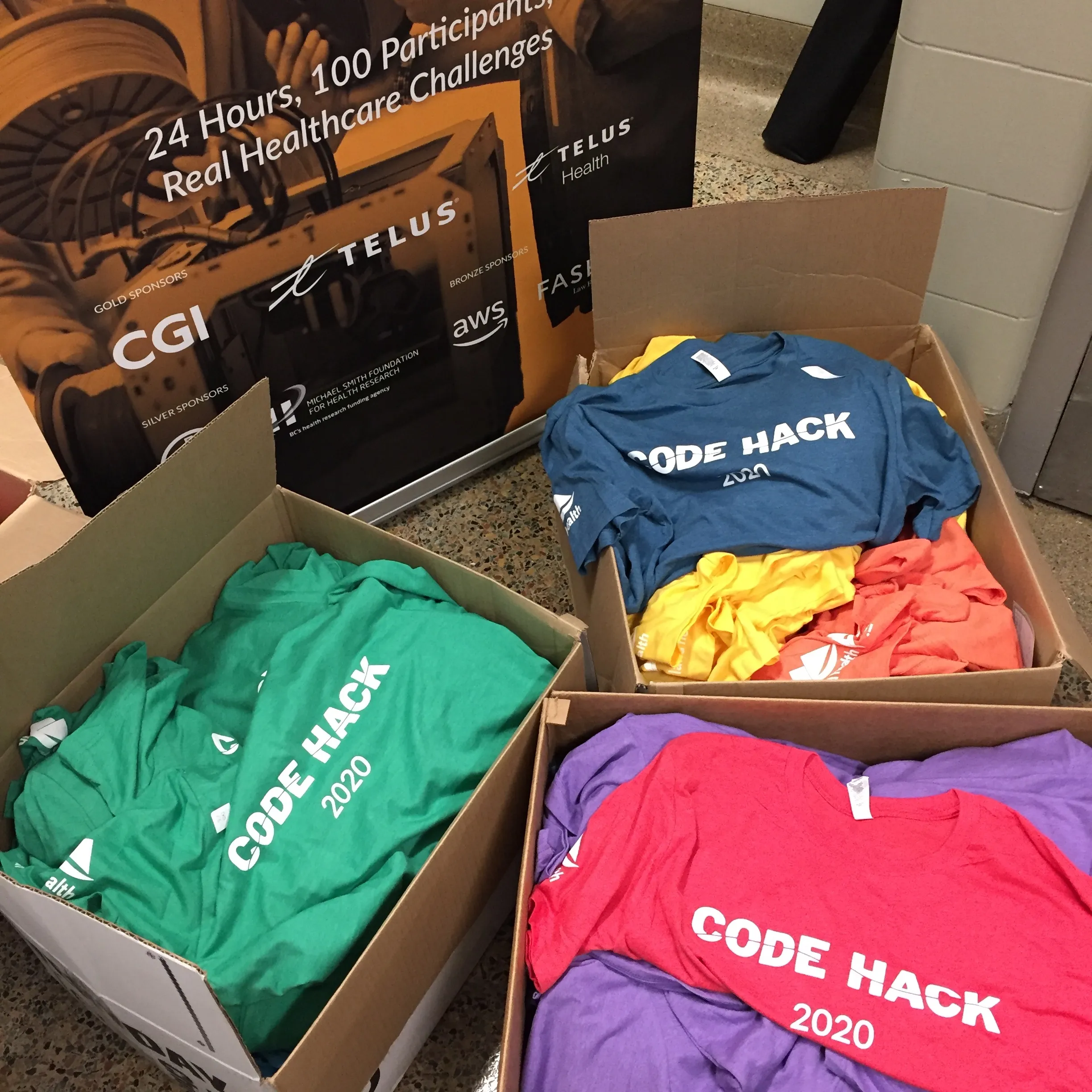
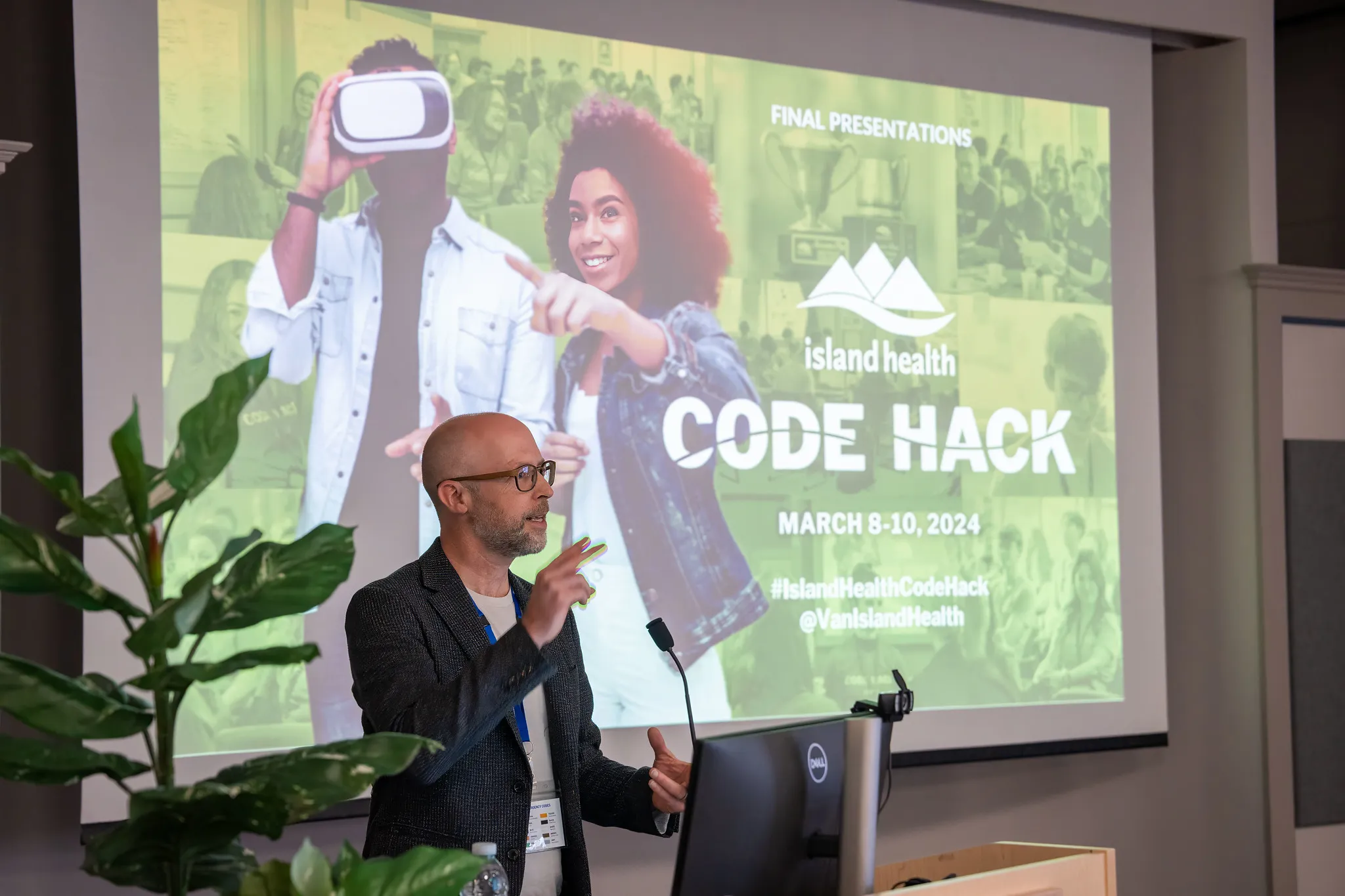
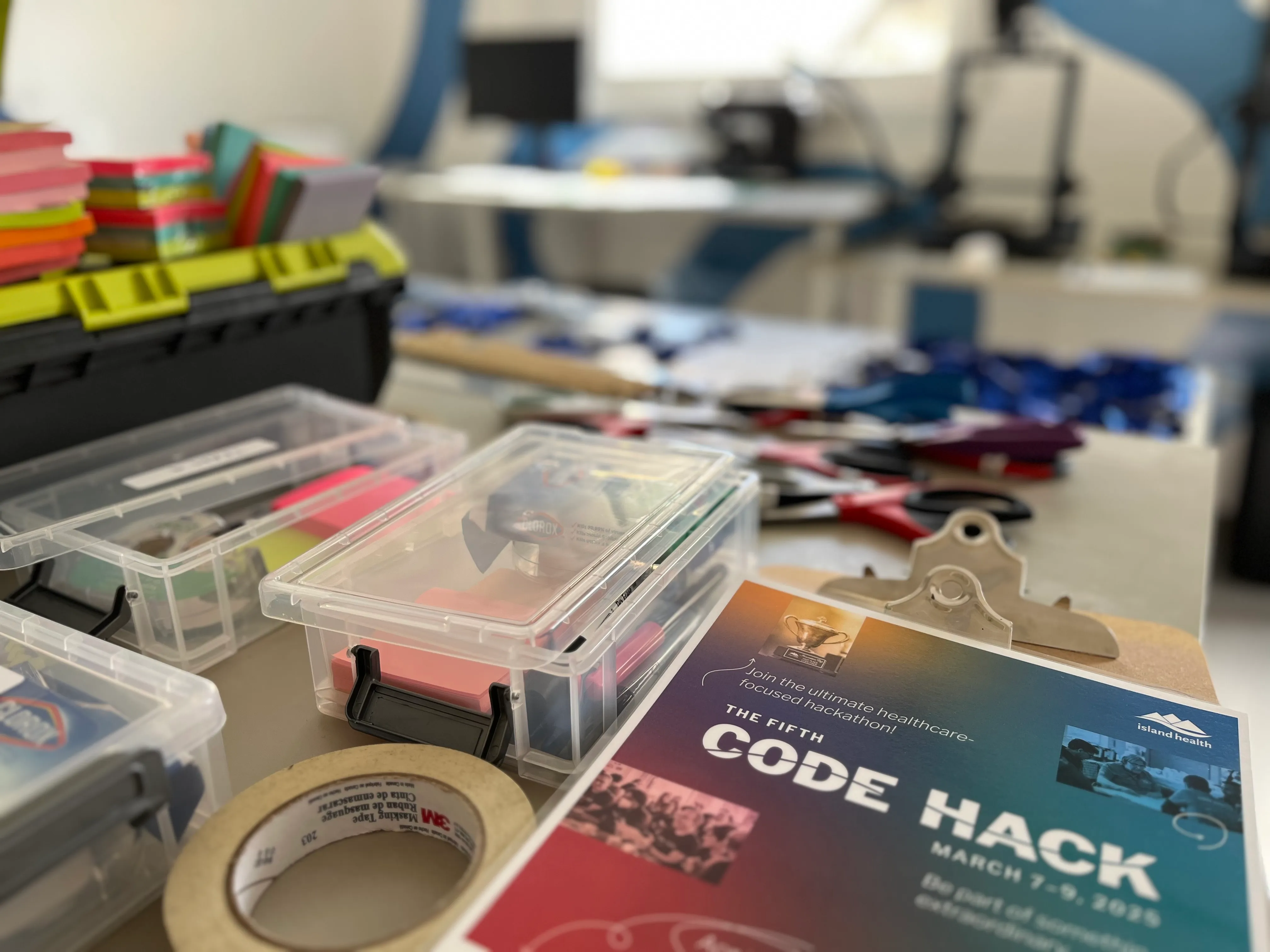
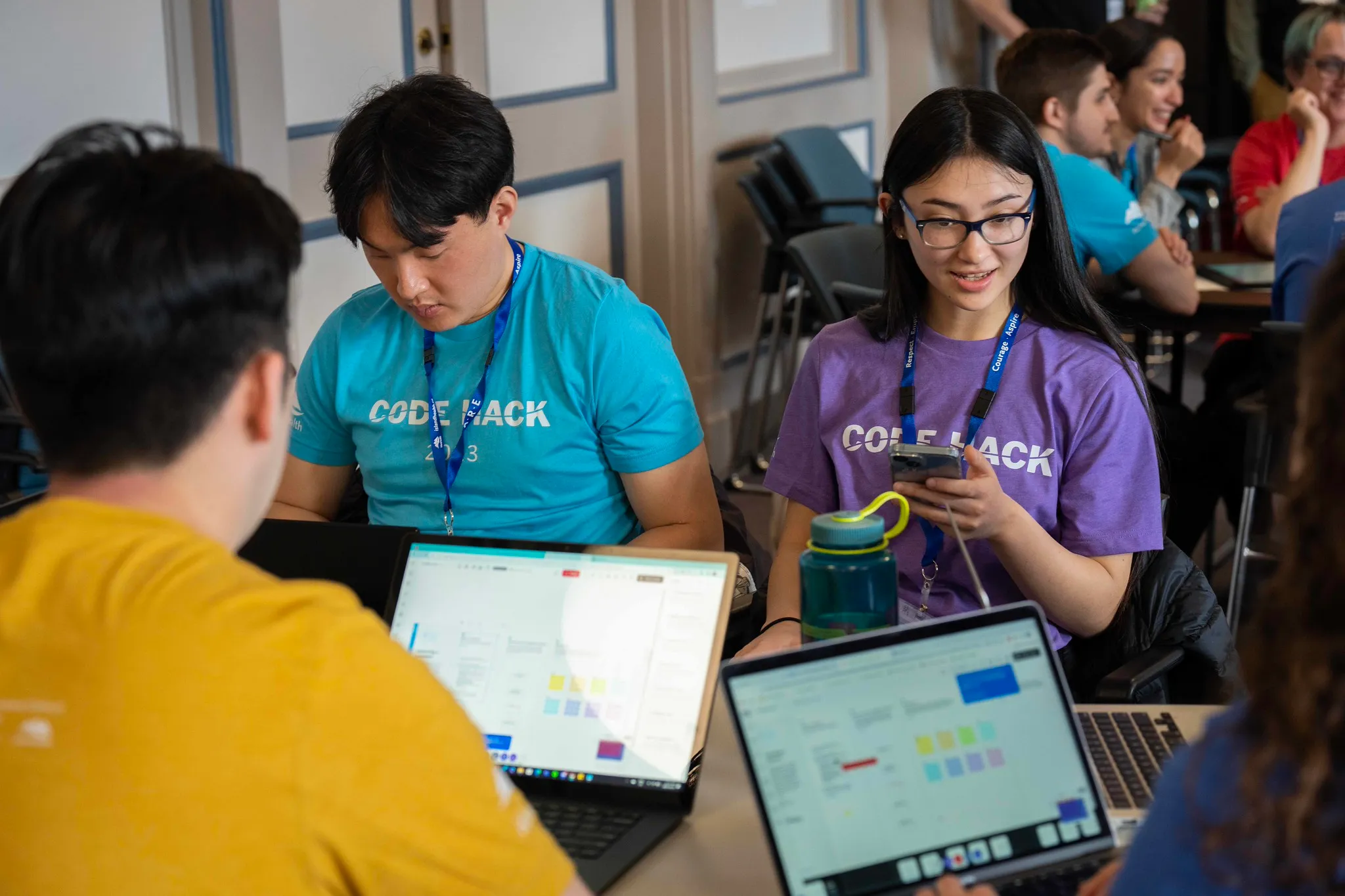
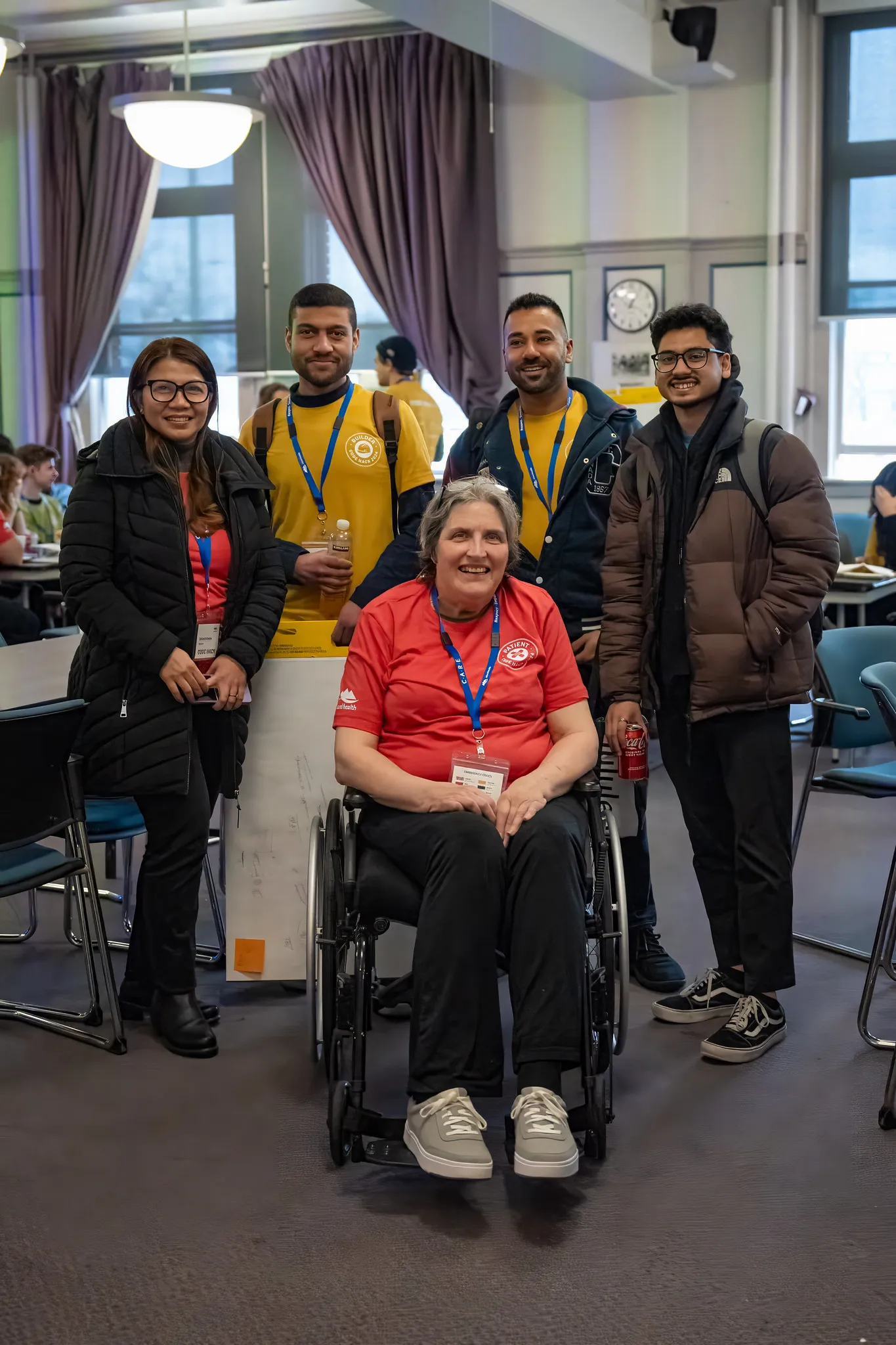
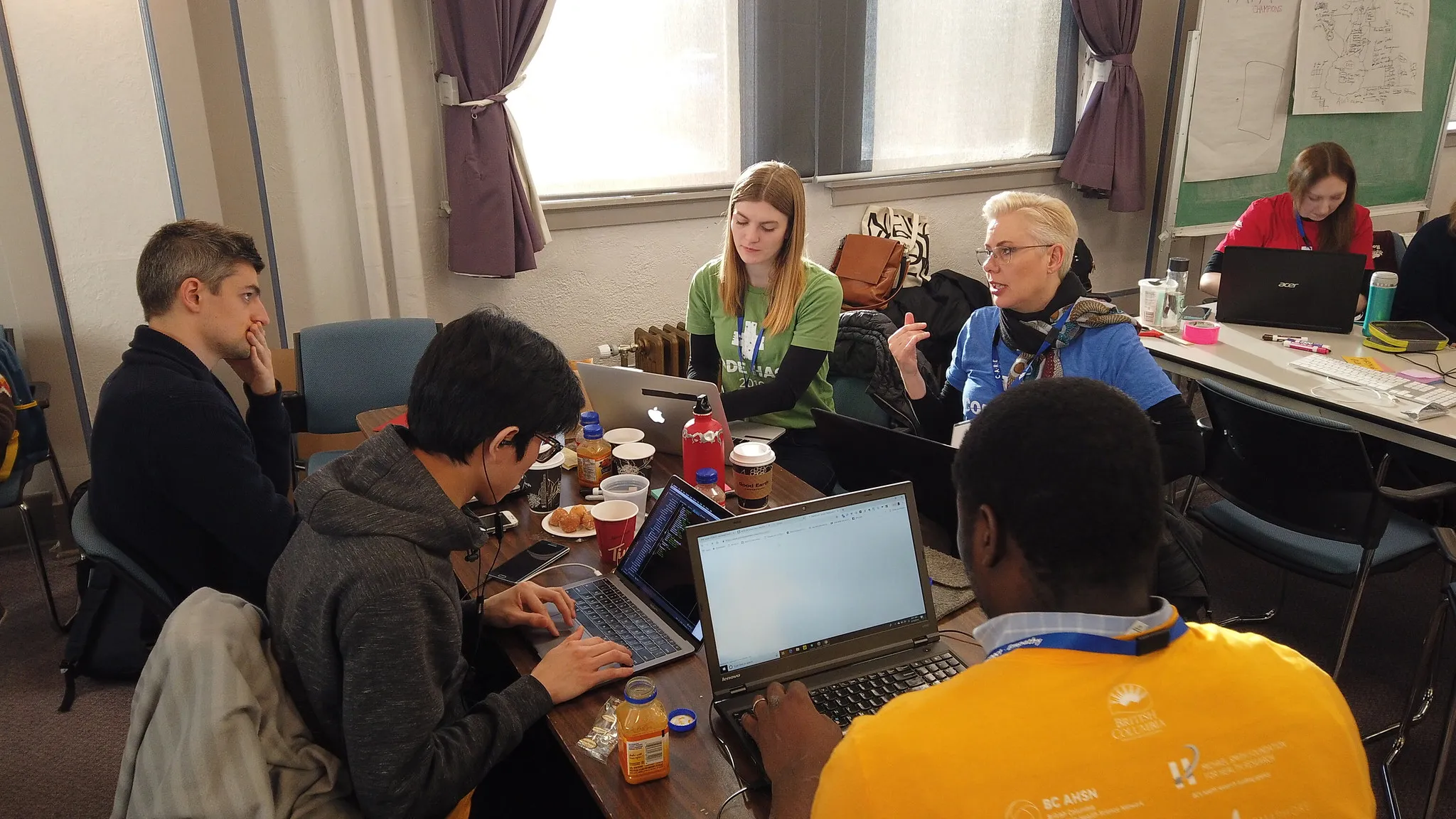
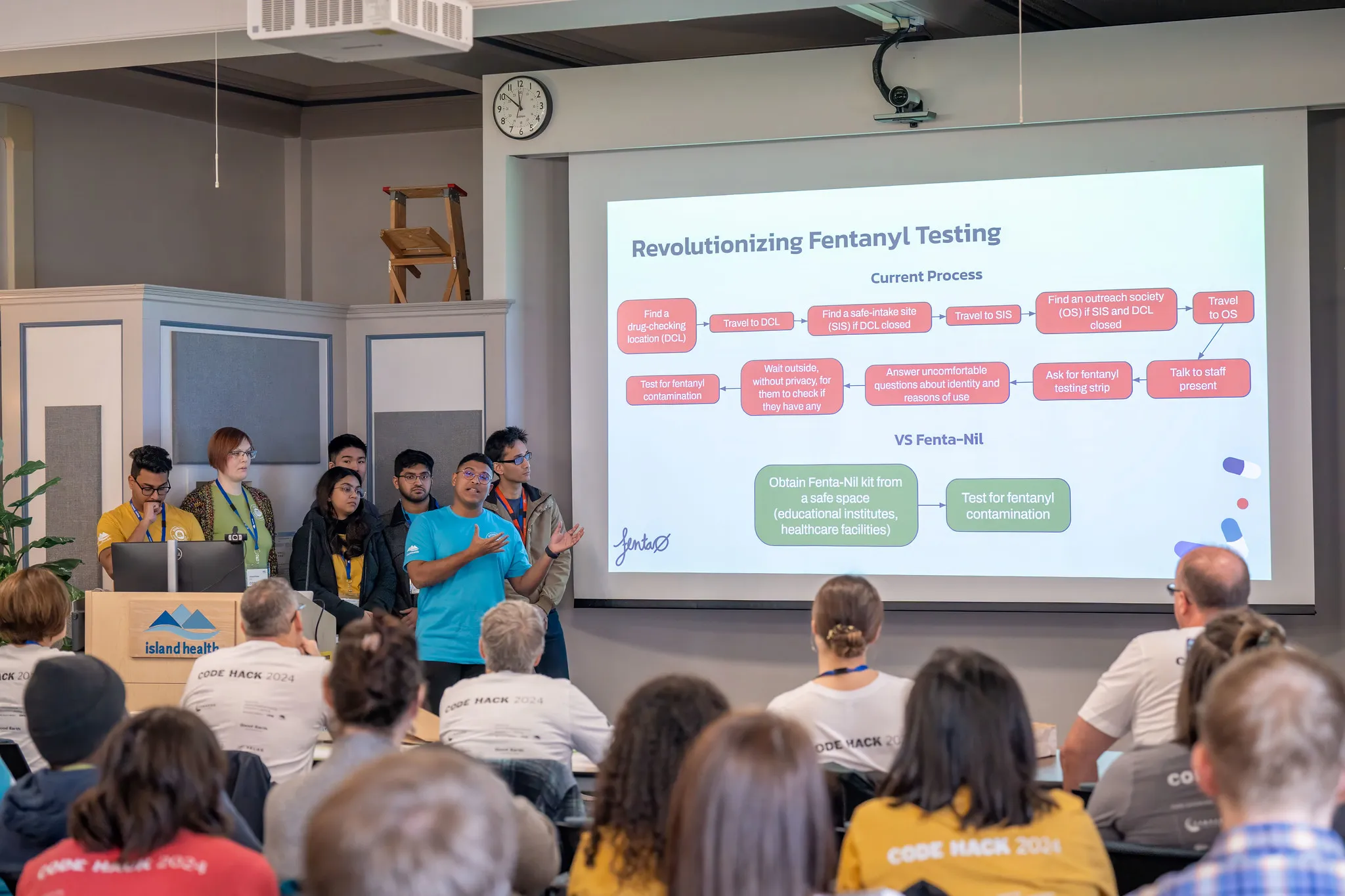
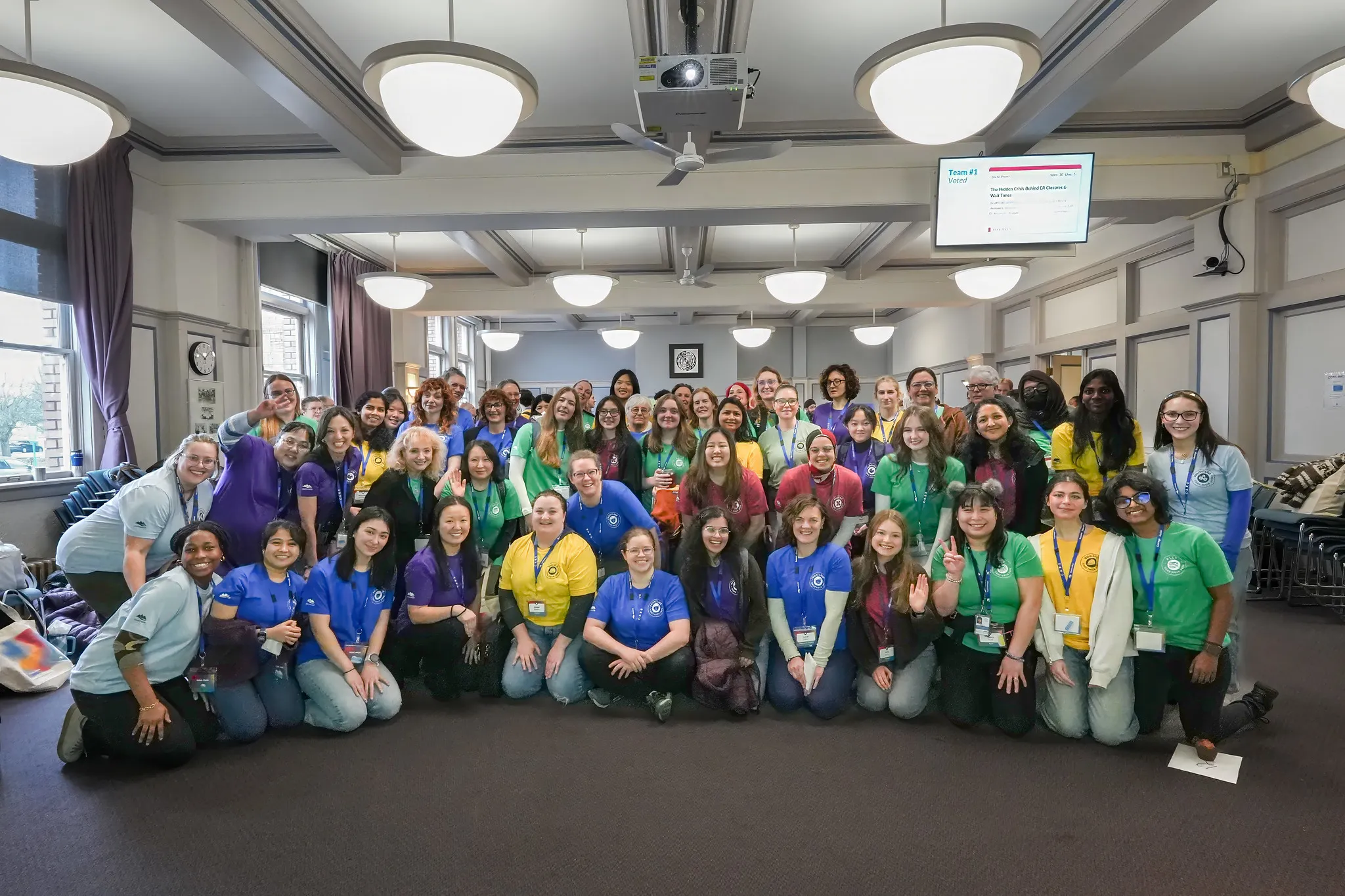
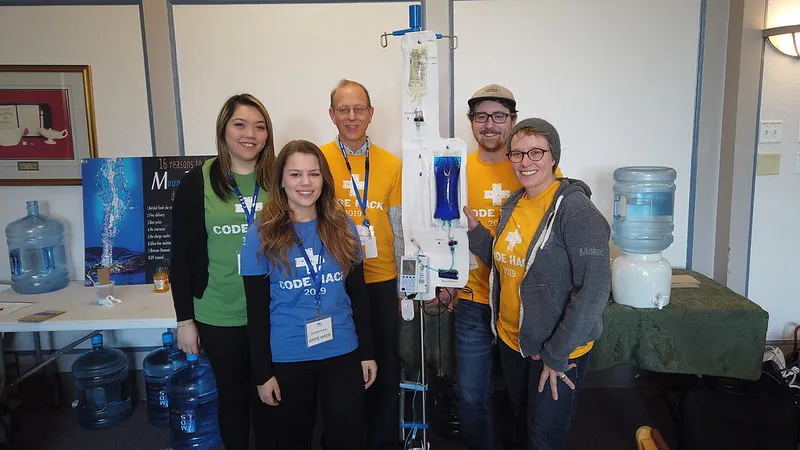
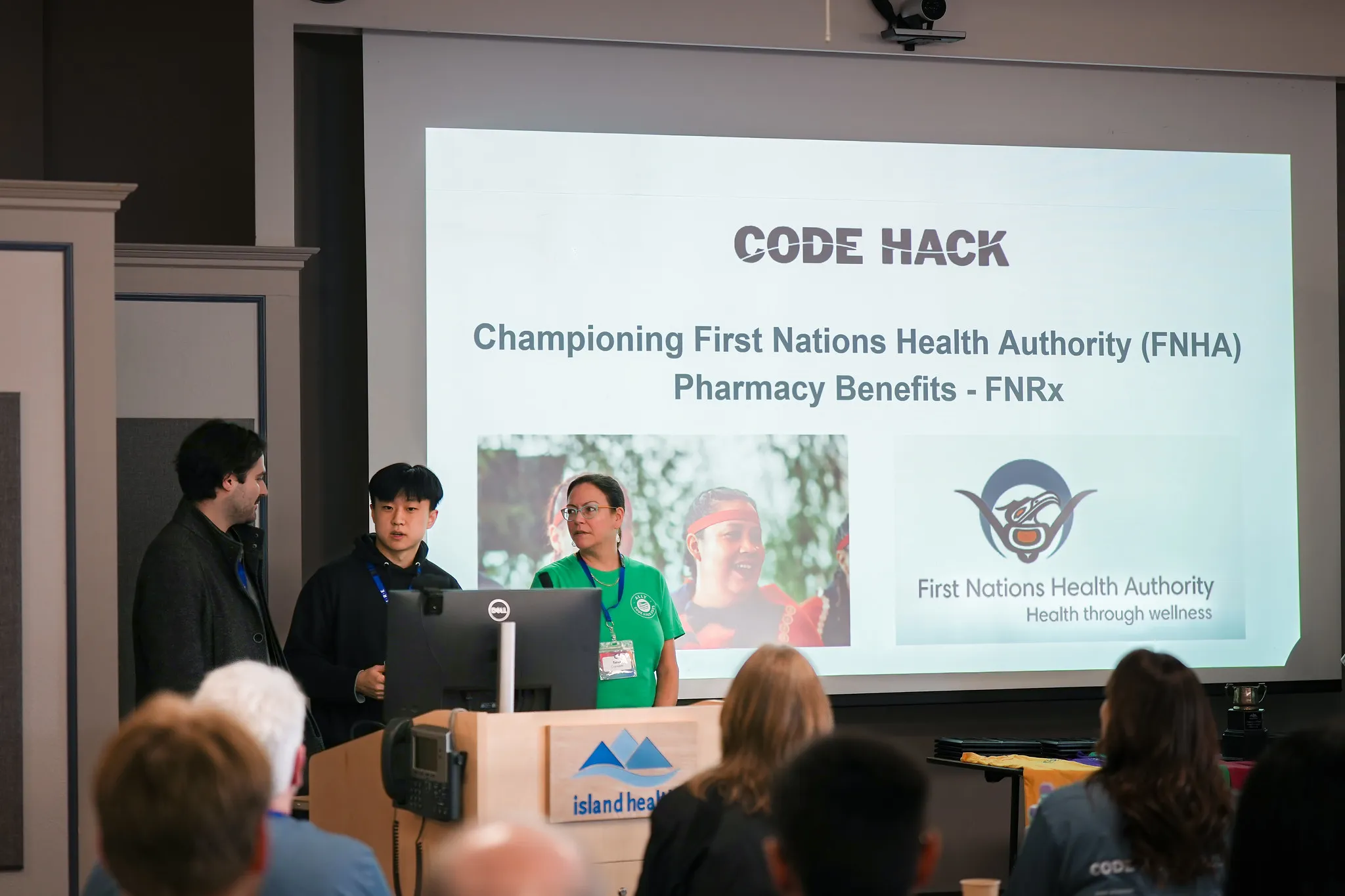
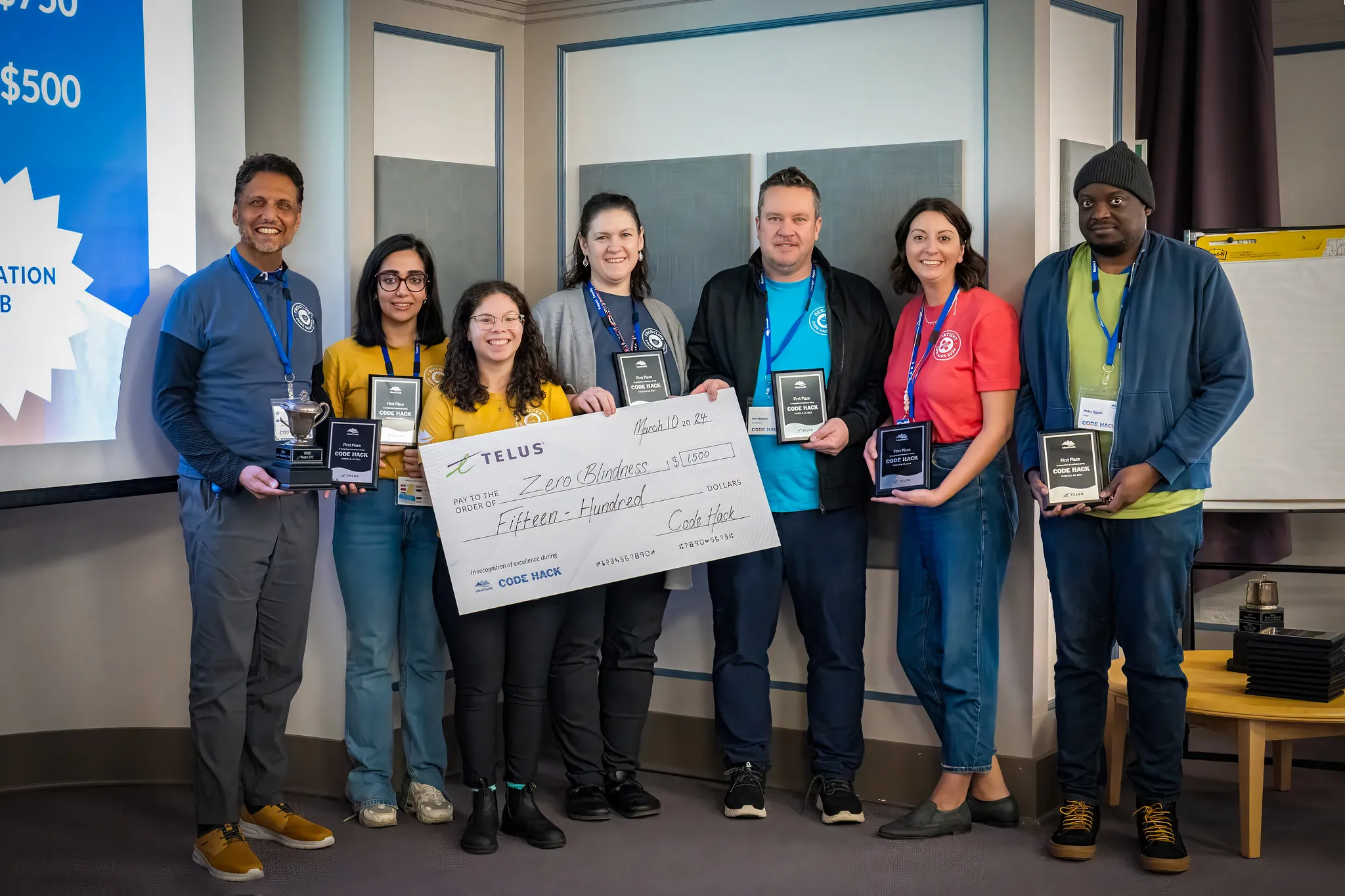
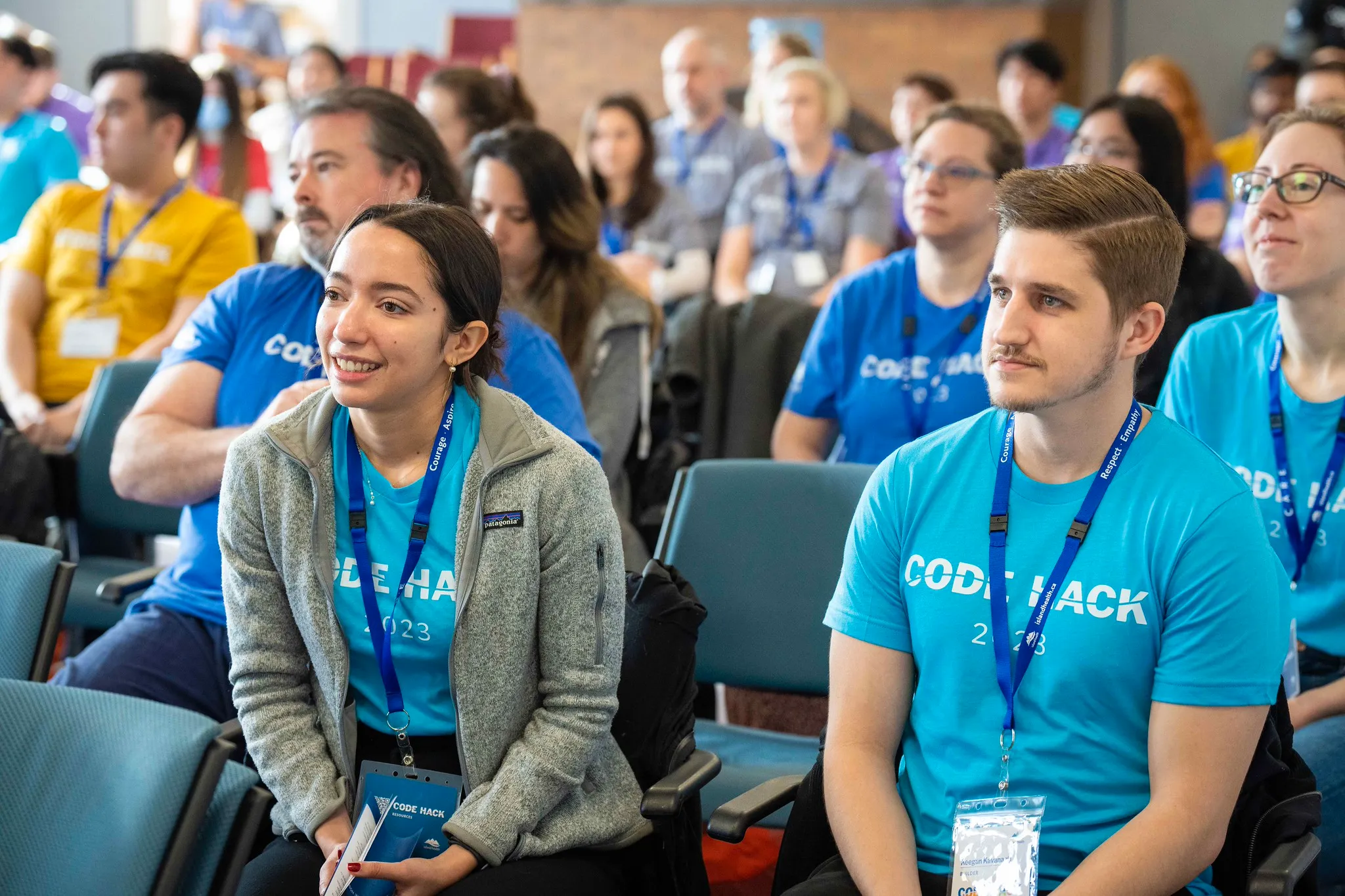
Code Hack took place in person over a 24-hour period at the Royal Jubilee Hospital in Victoria, BC from 2019 to 2025.
A Coalition of Partners
Code Hack started with 0% budget, 100% goodwill. From the first event, the model depended on sponsors who understood that putting their name on a health care hackathon meant something different than a typical sponsorship.
Meaningful improvement in a health system is an all-in effort. Over five annual events, more than 150 volunteers and 23 sponsors and community partners made the event possible, including enterprise technology companies, health foundations, academic institutions, government bodies, and community organizations. That breadth was necessary and intentional. I am grateful for their trust.
- AWS
- Bayer
- BC Academic Health Science Network
- BC Ministry of Health
- CGI
- Camosun Innovates
- Centre for Interprofessional Clinical Simulation Learning
- Circle Innovation
- Doctors of BC
- Fasken
- Good Earth
- Health Quality BC
- Michael Smith Foundation
- Mural
- Nanaimo & District Hospital Foundation
- Nurses & Nurse Practitioners of BC
- Patient Voices Network
- RT Prime
- Semaphor
- TELUS
- TELUS Health
- UVic Innovation Centre
- Victoria Hospitals Foundation
Built to Evolve
Code Hack ran five events over seven years, including a two-year pause during COVID. Each edition refined the model, building toward a program that could outlast the event itself.
Best Day at Work Ever
Code Hack was designed to be open to everyone. That meant patients who had never been invited into a design process before. Nurses who had ideas but no platform for them. The feedback was immediate.
I love the Code Hack tagline: 'Everyone is an innovator.' We need that now more than ever. Bringing diverse minds together is the way forward and experiencing the energy at Code Hack fills me with hope for the future. Kathy MacNeil · President & CEO, Island Health, 2025
I've wanted to be part of a hackathon for so long, but I've been shut out by academia and by the tech sector because I am a patient. Thank you for doing this.
Patient Partner ParticipantThe opportunity to work on healthcare issues with people within the healthcare industries was the most impactful part. As frontline staff I do not get the opportunity to formally work through problems with designers, coders, and other non-healthcare stakeholders.
Frontline Support ParticipantWhat works so well is having all the key players on a team, including a patient representative, to provide continuous real-time feedback as the ideas develop.
UVic Innovation Centre SponsorAfter 23 hours of thinking, creating, designing, building, and presenting a solution to a patient care challenge, it came down to one guiding inspiration for the team who earned the $1,500 first prize from the judges, and the people's choice award from participants: dignity.
Island Health Annual Report 2023I strongly recommend Code Hack next year for anyone who wants to innovate in health care or simply wants to understand our system better.
Developer ParticipantThe work done on the social media side helped me feel engaged and connected in a positive, meaningful way. I really appreciate this effort and wanted to thank all of those involved for their hard work.
Staff Ally ParticipantCode Hack was a great opportunity for Circle Innovation to participate at the ground level with patients, clinicians, technologists and designers to stimulate innovative thinking and solutions for BC health care... We're already looking forward to next year!
Circle Innovation Community SupporterIt's clear you are not just replicating and have to adapt to your local context and generate interest in creating innovation to solve genuine problems that your system's leaders want to have addressed.
Director Interior Health AuthorityThroughout the entire process, starting from sign up to the actual event, I felt very informed, making it a seamless transition from one step to the next.
Designer ParticipantPart of what made this a great Code Hack was that we had a really young demographic. Some of our presenters were from high school. So we're getting young people with good ideas, influencing and being influenced by those who have been in the health-care system for decades.
Event Organizer Code HackSources: Event surveys and Island Health publications.
Cited Nationally
Code Hack and the Innovation Lab were cited as a best-practice example in the Government of Canada Nurse Retention Toolkit, connecting frontline innovation programming directly to workforce sustainability. The program also appeared in Island Health's Annual Reports for 2023 and 2024, both board-approved publications.
Strategic Analysis
Code Hack was just one component within a sequence of a larger innovation strategy. I had a blueprint and executive support, but no budget. That's the paradox of innovation inside a large institution: the money exists, but it won't move toward an unproven idea. So I went outside and raised nearly $30,000 in sponsorship to run the first event.
Healthcare is known as a VUCA environment: volatile, uncertain, complex, and ambiguous. Under those conditions I embraced navigating through ambiguity within a network of many nodes. In that shifting environment, I could hold a vision of many outcomes, knowing I could only control or influence one node at a time.
And while I couldn't control end states, I could imagine and design for certain types of failures, shaping when they would occur, how they would unfold, and to what degree.
That meant designing and pitching innovative solutions that couldn't be implemented. Yet. That meant initiating an annual event that didn't have any resources to support people or outcomes. Yet. That meant starting an innovation lab without a physical space. Or a budget. Or equipment. Or staff. And yet all of those components fell into place within a planned sequence.
Below is a Wardley map showing Code Hack's strategic impact and how it connected across nodes within a complex health system over time. Orgs such as the UK's Government Digital Service use such maps for strategic planning.
Wardley maps chart customer needs across two dimensions. Vertically, they plot components of an organization's value chain ranging from visible (external) to invisible (internal). Along the horizon are four evolving phases of capabilities: genesis (creation), custom build, product, and utility. Code Hack's "customers" were participants, the health authority, and the BC health care system. As a platform Code Hack generated organizational capability (Innovation Culture), external credibility (National Recognition), and a model other health authorities could take and build from (Open Outcome Model).
Start at the bottom left and read up and right. The genesis-stage enablers (patient co-design, frontline voice) fed custom-built program components (Innovation Lab) that evolved into outputs adopted beyond Island Health. Providence Health built their own version, called Skunkworks. The Provincial Health Service Authority ran an internal one-day innovation event. Both used Code Hack as the starting point and adapted it to their own context.
Code Hack was built from nothing and evolved into a strategic commodity that was shared with other organizations.
What It Proved
Code Hack demonstrated that a nationally recognized innovation program can be built inside a regulated public health system, funded entirely from the outside, with no existing template.
What Worked
- Community ownership. Volunteers, sponsors, and community parnters built this program alongside us. It would never have been this successful without them.
- Structure enabled creativity. A clear format within a psychologically safe setting gave participants confidence to take creative risks.
- Cross-sector reach. The partner list included government, industry, academia, and community. Participants joined from each those, extending the reach of healthcare innovation outwards.
- Iterative infrastructure. Three generations of platform development starteing for $0 produced a cost-effective, secure collaboration tool that can be repurposed in any regulated or private sector environment.
What It Taught
- Make it real first. The hardest part is convincing yourself something real can exist before it does. Everything else follows from that.
- A pause isn't a finish. The pandemic stopped the event for two years. It came back with more sponsors, more volunteers, and 86.8% of participants saying they'd recommend it.
- Environment shapes behaviour. Healthcare workers showed up on their own time to fix a system that was shutting them out and grinding them down. They left feeling energized. A well-designed environment can turn individual frustration into collective momentum.
- Make yourself unnecessary. My goal was always to hand off the event and then scale Code Hack and the Innovation Lab across the region. When I was able to have a manager step into a fully funded, independently run lab to keep it going, I knew it had worked.