An Online Store,
Healthcare Brand,
& Reconciliation Story
Brand & Campaign
Revenue & Sponsorship
Program Design
Digital Transformation
A fresh e-commerce platform that imbued brand values into tangible products while giving a health authority a way to measure what its employees and patients actually believed in.
Every Child Matters
One of my career highlights was to envision and produce a print-on-demand, values-based online store for a public sector healthcare organization.
I set the platform launch date with enough time for employees to participate in the National Day for Truth and Reconciliation. It was my privilege and pleasure to commission an Orange Shirt design from Joslyn Charlie, an artist of the Nuu-chah-nulth and Kwakwaka'wakw nations.
Why Was This Important?"Wearing an orange shirt is a way to acknowledge the impact of Residential Schools, including honouring those who did not survive; it is also a way to celebrate the resilience of those who did survive and those who are healing themselves and their families and communities for generations to come." Sekwan Wabasca · Manager, Cultural Safety and Humility; department of Indigenous Health, Diversity, Equity and Inclusion, Island Health, 2024
Josyln's design carries a personal meaning and is reshared here with her permission. The story begins with her words.
Decolonizing contracts
Before working with Joslyn, my team and I met with Indigenous artists in the region to understand how best to invite and select an artist for a project that was culturally significant and unprecedented for the health authority.
We unanimously agreed an emerging artist would benefit the most from this scale of direct exposure at a critical point in their career. When we connected with Joslyn and reviewed her work, we knew she was the one.
It’s no secret the healthcare system is a mechanism of colonialism, with a record of systemic racism that continues right up to the very moment you read these words. The entire process needed to be safe and culturally appropriate.
When I wrote up the contract, I saw right away the standard boilerplate agreement was full of colonial language. Non-exclusive. Perpetual. License to modify, adapt, and repurpose. This was no way to begin a partnership.
Consulting with Joslyn and the Contracts department, we co-created a contract to use for cultural work. Rights and intellectual property retained by the artist. Limited to specific one-time use. A one year fixed term. Option to extend. By honouring artists in this way, the store program was designed at the contract level to enable reconciliation by expanding Indigenous artist relationships year after year.
Some might say this is still just capitalism. I view it as an example of etuaptmumk, the Mi’kmaw word for two-eyed seeing, an action-oriented approach that values Indigenous and Western ways of being.
From insight to strategic impact
One September weekend at an Ovarian Walk of Hope, I ran into a healthcare colleague. Together in that crowd of supporters, all of us wearing teal shirts, I wondered how many other coworkers gathered at similar events. On their own time. Showing up for people they loved and causes they believed in.
Odds were good. Island Health employs more than 30,000 people across a region of 930,000. That's 1 in 30. In any Island crowd, there's likely one close by. And no one would know.
Then it struck me. What might it feel like for communities to see healthcare workers showing up all around them? At cancer walks. In grocery stores. How might it feel when staff recognize each other in public with a nod and a smile? Would that boost morale and increase pride, wearing values they shared?
My hypothesis was to create an online store offering quality apparel and products that expressed Island Health's brand values: Courage. Aspire. Respect. Empathy.
The store campaign launched in August 2024 as an employee-only Beta. It had just one product, Josyln Charlie's beautiful eagle design. While future products were priced to generate revenue, orange shirts and hoodies were sold at cost. I would not put a margin on reconciliation.
Where surveys capture what employees think, purchases reveal what they value.
Was my hypothesis correct? First month sales were $40,000. At 5% of the workforce, the new business model provided unique values-based metrics not previously obtainable.
I was scaling up the public launch when I got promoted to a new role. I gave the incoming executive director my strategy. A roadmap to partner with foundations. Six tested products designed for specific brand values. Content ready to publish.
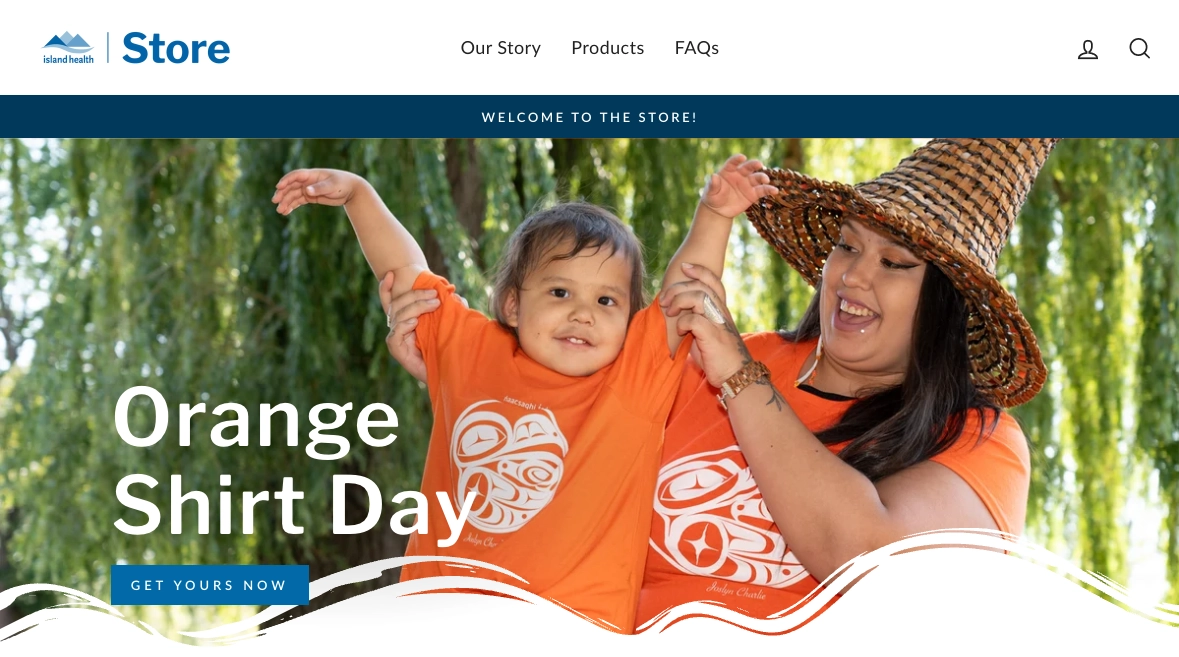
Shopify store and apparel design by Stephen Mullally
Establishing a revenue stream without a mandate
Before presenting the strategy and briefing to Executive to create a new financial and structural program, I got busy managing the change in advance.
Health authorities don't typically run online brand stores. There was no precedent, no policy, and no payment path. Just people who needed to be convinced it was possible and worth doing.
- For the Chief Financial Officer: I laid out how I partnered with their Finance leaders across Accounts Recievable, Accounts Payable, and Treausury to establish Ledger accounts, manage revenue, collect and remit tax, and pay vendors.
- As the Data Steward: I was accountable for data handling, privacy, and platform governance. I made sure to consult leaders in Legal, Risk, Privacy, and Security... anyone with justifiable reasons to be concerned and who could ensure everything was handled properly.
- For the Communications VP: I presented a method to measure, govern, and grow the brand instead of letting it leak out when employees took some version of the logo to an apparel shop.
But before doing any of that, I sought external validation. Who else in the public sector was doing something similar? Thankfully the BC Liquor and Cannabis Branch had already solved how a regulated organization runs an online retail channel and were helpful sharing their experience. Particularly around how their data stayed within Canada. Enter Shopify, a made in Canada cloud-based e-commerce platform.
Courage, Aspire, Respect, or Empathy.
You choose what you value, then pick the matching product. Truly unconventional. And the whole point.
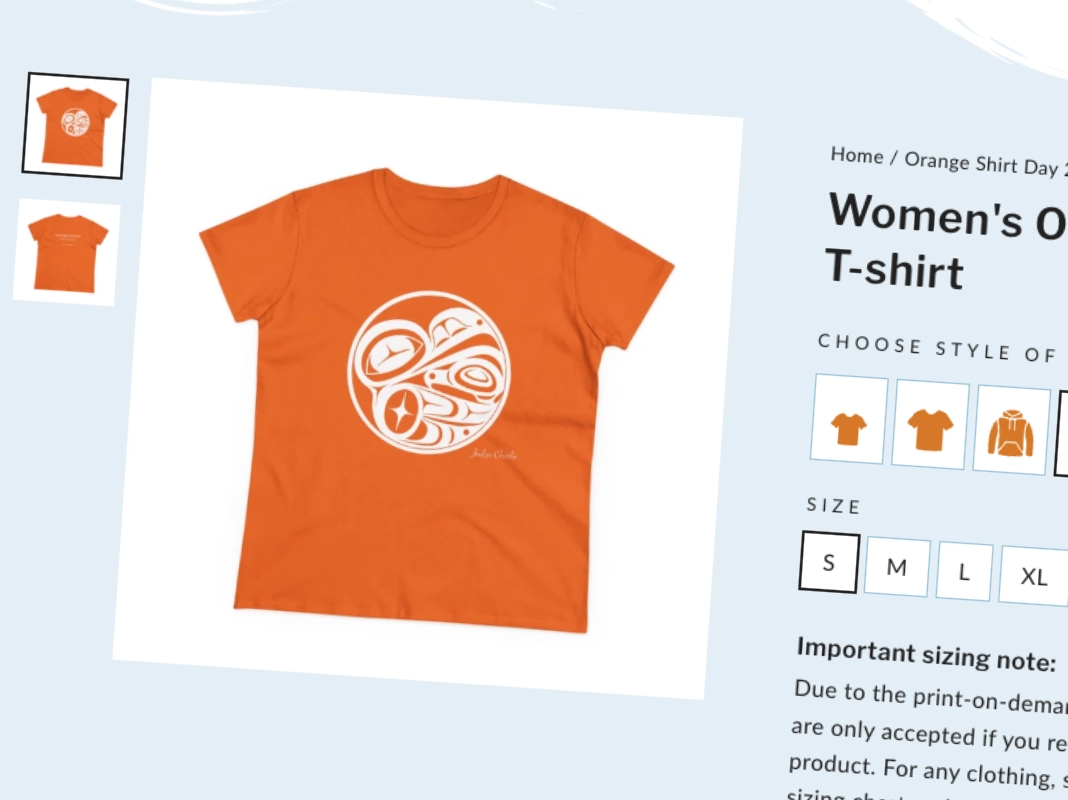

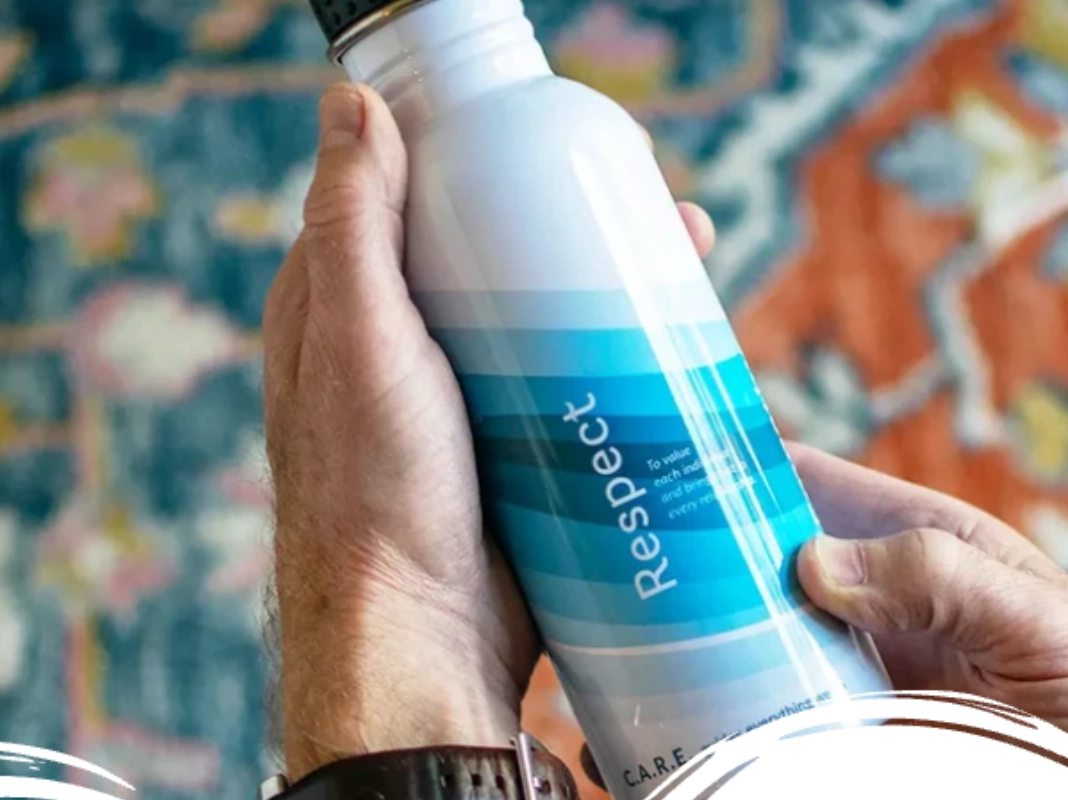
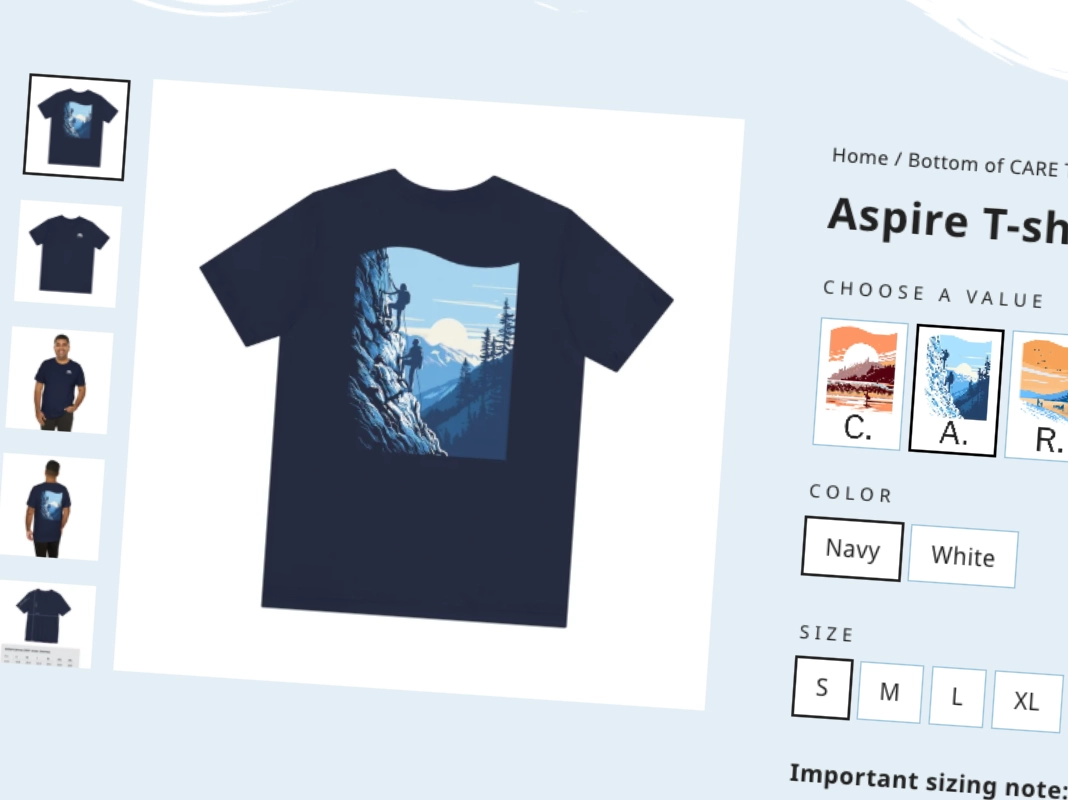
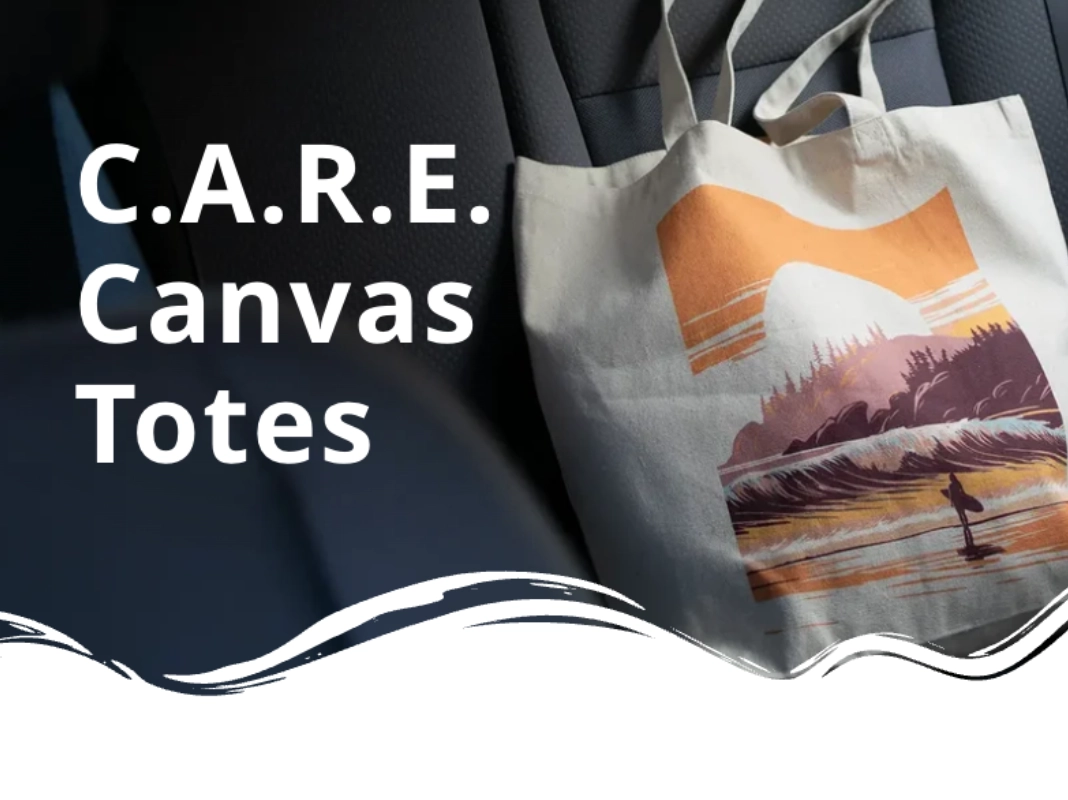
Shopify store and apparel design by Stephen Mullally
Was it hard? Yes. Worth it? Yes.
Multiple currencies. Real-time billing. Digital wallets...
Two currencies, one sale.
A customer pays in Canadian dollars. The company that prints and ships the product gets paid in US dollars. Every single order involves a currency exchange.
Billed the instant someone buys, not once a month.
Government finance runs on invoices. One bill. Once a month. Paid on a schedule. These vendors charged per order in real time.
Money had to be sitting in there not promised later.
Because vendors billed instantly, there had to be real US dollars sitting in a digital wallet at all times ready to be drawn on. Public money doesn't normally sit in a wallet in advance, particularly outside the organization's bank.
A card built for expenses, not commerce.
The purchasing card used to fund all this had a monthly limit sized for occasional expenses. A good sales month would break that ceiling before the month was even over.
The accounting wasn't set up for e-commerce.
The organization had never collected sales tax as a retailer or tracked what something cost to make versus what it sold for. Selling anything at all meant creating a whole new proecess.
The exchange rate is not fixed.
The exhange rate the time of purchase can be different at the time of billing. That difference needed to be reconciled for every order.
I've met people working government and healthcare who think that no one is willing to change policies or procedures if it's not mandated. That's just not true. Every team was excited to contribute in making the new program a reality.
What a Store Can Be
The point was never the product. It was building a channel that carried values, measured belief, and reached all the way to a patient's bedside.
What Worked
- Speak the language that funds things. An executive committee does not fund a feeling. Framed as revenue and brand governance, the idea cleared Executive Committee and earned a program.
- The business layer is the build. Payment architecture, privacy, and six departments of sign-off took longer than the store itself. New processes take much longer.
- Ask someone who has already solved your problem. Nobody in BC healthcare had run an ecommerce channel. The BC Liquor and Cannabis Branch had. That precedent made the project. The phone call saved months.
- Lead with values, not products. When doing heart work, the platform becomes vehicle of expression, not just a store.
What It Taught
- Reconciliation is a design decision. Decolonizing the contract, reserving rights to the artist, and committing to a new artist each year mattered. The orange shirt was just one part of it.
- Influence beats authority. I ran none of the six departments I needed. Moving a system you do not control is the real skill.
- Stay patient. Stay open. Approval for the store happened just before the pandemic hit. The discipline was keeping the mandate alive until conditions were right again.
- The first product pays for the rest. The first product revenue line creates the payment path, the privacy conditions, and the permission to operate. Everything that follows is just good designs and smooth business.